ALPINEASCENTS
Everything you need to know about Mountaineering... ExploreMountaineering, also called mountain climbing, the sport of attaining, or attempting
to attain, high points in mountainous regions, mainly for the pleasure of the climb.
Although the term is often loosely applied to walking up low mountains that offer
only moderate difficulties, it is more properly restricted to climbing in localities
where the terrain and weather conditions present such hazards that, for safety, a
certain amount of previous experience will be found necessary. For the untrained,
mountaineering is a dangerous pastime.Mountaineering, otherwise known as mountain climbing,
is a very popular outdoor sport. There are thousands of mountains in the world, all with their
own unique terrain, their own challenges and excitements.
Mountaineering differs from other outdoor sports in that nature alone provides the field of
action—and just about all of the challenges—for the participant. Climbing mountains embodies the
thrills produced by testing one’s courage, resourcefulness, cunning, strength, ability, and stamina
to the utmost in a situation of inherent risk. Mountaineering, to a greater degree than other sports,
is a group activity, with each member both supporting and supported by the group’s achievement at every stage.
For most climbers, the pleasures of mountaineering lie not only in the “conquest” of a peak but also in
the physical and spiritual satisfactions brought about through intense personal effort, ever-increasing
proficiency, and contact with natural grandeur.
Technically anybody could walk to the top of a mountain but this would not
make them a mountaineer. Mountaineering can best be described as the ascent of
any hill or mountain where the gradient and severity of the terrain requires
some form of climbing and the sustained use of technical equipment.
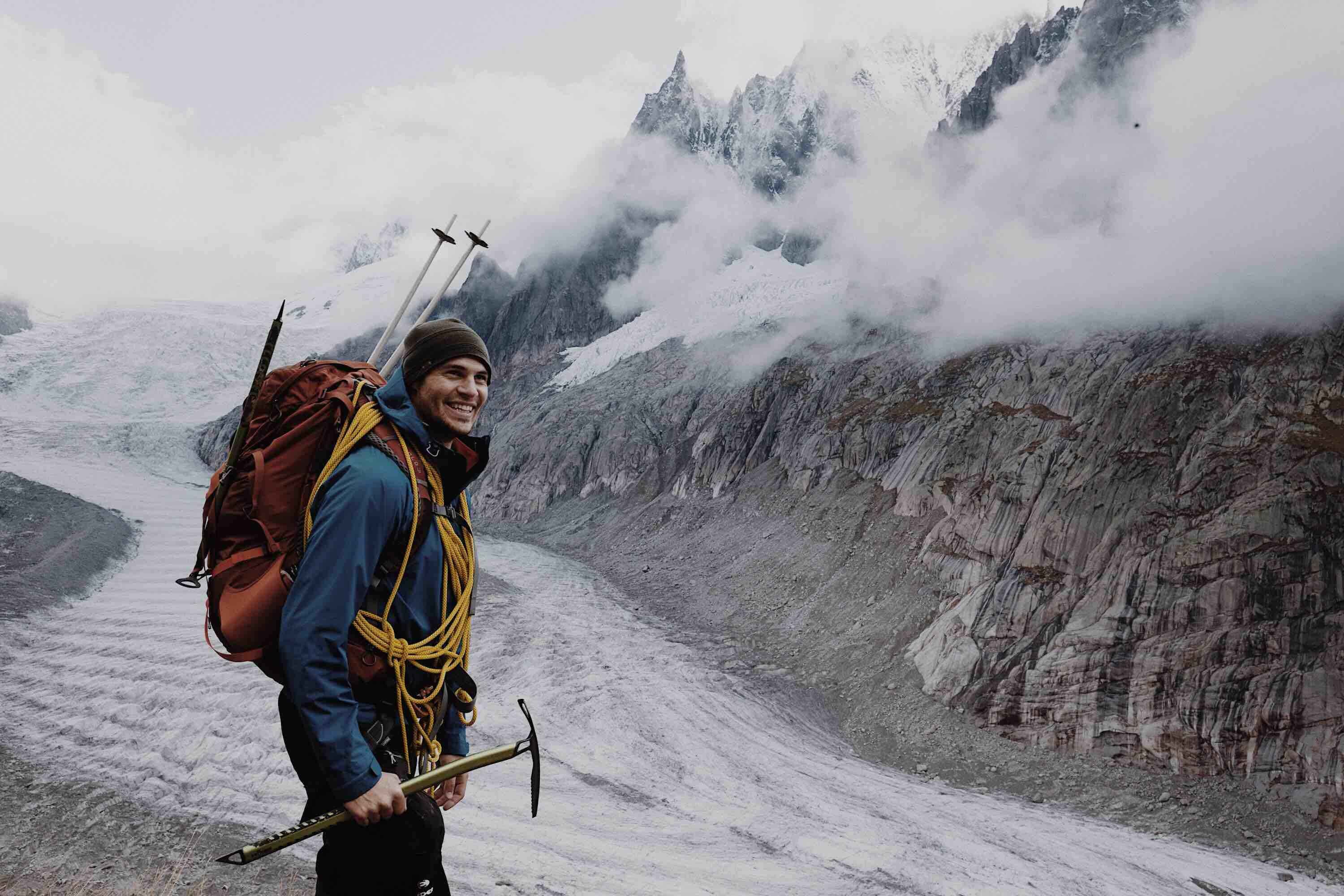
In summer this equipment can include a helmet, rope, harness, karabiner and
protective climbing equipment, and in winter will include the addition of
crampons, an ice axe and protective ice-climbing equipment.
Mountaineering will inevitably involve periods of hill walking but what
distinguishes these two activities is whether you need to use technical
equipment in order to reach your objective: the summit!
There are numerous benefits to mountaineering. The most obvious benefits are
improving both your physical fitness and cardiovascular fitness levels as well
as reducing body fat through aerobic exercise. Some other less obvious or ‘less
tangible’ benefits include greatly improving your own personal confidence and team
working skills, which you will use in your work and personal life without even realising it!
Early attempts to ascend mountain peaks were inspired by other than sporting motives:
to build altars or to see if spirits actually haunted once-forbidden heights, to get
an overview of one’s own or a neighbouring countryside, or to make meteorological or
geological observations. Before the modern era, history recorded few attempts to
ascend mountain peaks for the mere sake of the accomplishment. During the 18th
century a growing number of natural philosophers—the scientists of their day—began
making field trips into the Alps of Europe to make scientific observations. The area
around Chamonix, France, became a special attraction to those investigators because
of the great glaciers on the Mont Blanc chain.
Mountaineering in a contemporary sporting sense was born when a young Genevese
scientist, Horace-Bénédict de Saussure, on a first visit to Chamonix in 1760, viewed
Mont Blanc (at 15,771 feet [4,807 metres] the tallest peak in Europe) and determined
that he would climb to the top of it or be responsible for its being climbed. He
offered prize money for the first ascent of Mont Blanc, but it was not until 1786,
more than 25 years later, that his money was claimed—by a Chamonix doctor, Michel-Gabriel
Paccard, and his porter, Jacques Balmat.
A year later de Saussure himself climbed to the summit
of Mont Blanc. After 1850 groups of British climbers with Swiss, Italian, or French guides scaled
one after another of the high peaks of Switzerland. A landmark climb in the growth of the sport was the spectacular
first ascent of the Matterhorn (14,692 feet [4,478 metres]) on July 14, 1865, by a party led by an
English artist, Edward Whymper. In the mid-19th century the Swiss developed a coterie of guides whose
leadership helped make mountaineering a distinguished sport as they led the way to peak after peak
throughout central Europe.
As the 20th century wore on, the truly international character of mountaineering began to
reveal itself. Increasingly, Austrians, Chinese, English, French, Germans, Indians, Italians,
Japanese, and Russians turned their attention to opportunities inherent in the largest mountain
landmass of the planet, the Himalayas and neighbouring ranges. After World War I the British made
Everest their particular goal. Meanwhile, climbers from other countries were making spectacularly
successful climbs of other great Himalayan peaks. A Soviet team climbed Stalin Peak (24,590 feet
[7,495 metres])—later renamed Communism Peak and then Imeni Ismail Samani Peak—in the Pamirs in 1933,
a German party succeeded on Siniolchu (22,600 feet [6,888 metres]) in 1936, and the English climbed
Nanda Devi (25,646 feet [7,817 metres]) the same year. In 1940–47The Alpine Journal of London, a reliable
chronicler of ascents, listed for the first time no peaks ascended—a reflection, of course, of the
imperatives of World War II.
Beginning in the 1960s, mountaineering underwent several transformations. Once peaks were climbed, the
emphasis moved to a search for increasingly difficult routes up the mountain face to the summit, as in
the golden age of the Alpine ascents. A notable example was the 1963 ascent of the West Face of Everest
by two members of the first American team to climb the mountain. Moreover, vertical or other so-called
impossible rock faces were being scaled through the use of newly developed artificial aids and advanced
climbing techniques. Smooth vertical faces of granite were overcome in climbs lasting days or even
weeks at a time—for example, the 27-day conquest by American climbers in 1970 of the sheer 3,600-foot
(1,100-metre) southeast face of the granite monolith El Capitan in Yosemite National Park in the North
American Sierra Nevada range. Other notable developments included an increase in the “Alpine” style of
climbing the highest peaks, where mountaineers carried a minimal amount of equipment and supplies and
did not rely on porters and other outside support, and a rise in the number of people climbing at high
elevations without the use of supplemental oxygen.
Read More >>>
Early attempts to ascend mountain peaks were inspired by other than sporting motives:
to build altars or to see if spirits actually haunted once-forbidden heights, to get
an overview of one’s own or a neighbouring countryside, or to make meteorological or
geological observations. Before the modern era, history recorded few attempts to
ascend mountain peaks for the mere sake of the accomplishment. During the 18th
century a growing number of natural philosophers—the scientists of their day—began
making field trips into the Alps of Europe to make scientific observations. The area
around Chamonix, France, became a special attraction to those investigators because
of the great glaciers on the Mont Blanc chain.
Mountaineering in a contemporary sporting sense was born when a young Genevese
scientist, Horace-Bénédict de Saussure, on a first visit to Chamonix in 1760, viewed
Mont Blanc (at 15,771 feet [4,807 metres] the tallest peak in Europe) and determined
that he would climb to the top of it or be responsible for its being climbed. He
offered prize money for the first ascent of Mont Blanc, but it was not until 1786,
more than 25 years later, that his money was claimed—by a Chamonix doctor, Michel-Gabriel
Paccard, and his porter, Jacques Balmat.
A year later de Saussure himself climbed to the summit
of Mont Blanc. After 1850 groups of British climbers with Swiss, Italian, or French guides scaled
one after another of the high peaks of Switzerland. A landmark climb in the growth of the sport was the spectacular
first ascent of the Matterhorn (14,692 feet [4,478 metres]) on July 14, 1865, by a party led by an
English artist, Edward Whymper. In the mid-19th century the Swiss developed a coterie of guides whose
leadership helped make mountaineering a distinguished sport as they led the way to peak after peak
throughout central Europe.
As the 20th century wore on, the truly international character of mountaineering began to
reveal itself. Increasingly, Austrians, Chinese, English, French, Germans, Indians, Italians,
Japanese, and Russians turned their attention to opportunities inherent in the largest mountain
landmass of the planet, the Himalayas and neighbouring ranges. After World War I the British made
Everest their particular goal. Meanwhile, climbers from other countries were making spectacularly
successful climbs of other great Himalayan peaks. A Soviet team climbed Stalin Peak (24,590 feet
[7,495 metres])—later renamed Communism Peak and then Imeni Ismail Samani Peak—in the Pamirs in 1933,
a German party succeeded on Siniolchu (22,600 feet [6,888 metres]) in 1936, and the English climbed
Nanda Devi (25,646 feet [7,817 metres]) the same year. In 1940–47The Alpine Journal of London, a reliable
chronicler of ascents, listed for the first time no peaks ascended—a reflection, of course, of the
imperatives of World War II.
Beginning in the 1960s, mountaineering underwent several transformations. Once peaks were climbed, the
emphasis moved to a search for increasingly difficult routes up the mountain face to the summit, as in
the golden age of the Alpine ascents. A notable example was the 1963 ascent of the West Face of Everest
by two members of the first American team to climb the mountain. Moreover, vertical or other so-called
impossible rock faces were being scaled through the use of newly developed artificial aids and advanced
climbing techniques. Smooth vertical faces of granite were overcome in climbs lasting days or even
weeks at a time—for example, the 27-day conquest by American climbers in 1970 of the sheer 3,600-foot
(1,100-metre) southeast face of the granite monolith El Capitan in Yosemite National Park in the North
American Sierra Nevada range. Other notable developments included an increase in the “Alpine” style of
climbing the highest peaks, where mountaineers carried a minimal amount of equipment and supplies and
did not rely on porters and other outside support, and a rise in the number of people climbing at high
elevations without the use of supplemental oxygen.
There are two main styles of mountaineering:
1. Alpine: Alpine mountaineering is practiced in medium sized mountains, as opposed to the expedition style’s larger mountains.Alpine mountaineers pack light and move quick and they make a swift push to the peak. This is possible as medium sized mountains, like the Alps or the Rocky Mountains, can be scaled relatively more quickly.
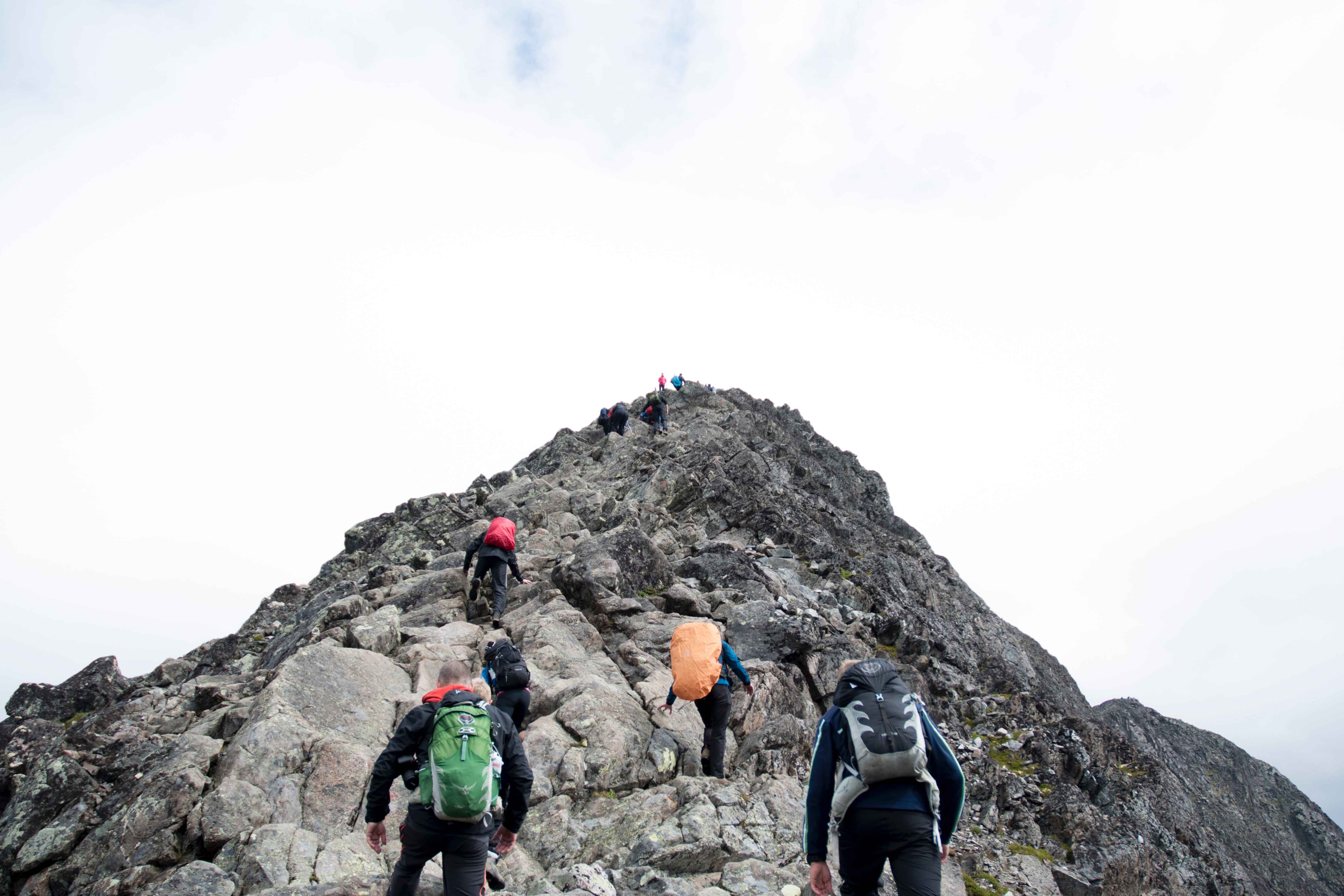
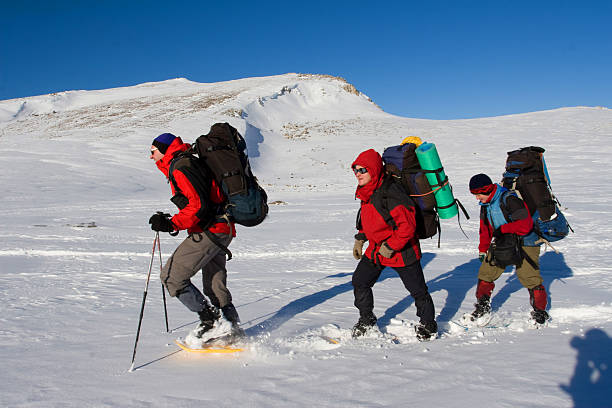
2. Expedition: Expedition mountaineers, on the other hand, move slow and carry much heavier loads. This is necessitated as these larger mountains, like the Himalayas and the Alaska Range, take weeks or months to climb and as the journey between base camps is much longer. Expeditioners can even travel with pack.
By climbing technique we mean a particular method of acting which the mountaineer uses to move about in the terrain. While the climber progresses directly along the rope (single rope technique) with rope techniques used in speleoalpinism, work at heights or rescue work, in mountaineering or rock climbing the mountaineer moves along climbing terrain during the ascent. At the same time the mountaineer has a choice of two climbing techniques: either free climbing or technical climbing. With free climbing the climber overcomes gravity using only her own strength and progresses uses only natural rock formations. At the same time certain methods of protection techniques, meaning accessories and gear, are used simply to protect her from a fall. In comparison to this, during technical climbing artificial resources are used for progress, intermediate points protection (pitons, nuts, etc.) are grasped with the hands and runners and other stirrups are hung from intermediate points of protection placed in the rock and stepped in. Indeed technical climbing is so specific that it is often perceived as an entirely independent mountaineering discipline.
■ Gaston: A gaston is the inverse of side pull. In a side pull, the hold is oriented so that you pull in, toward yourself. A gaston is also oriented for a sideways force, but instead of a pull in, it requires a push out. The position is kind of like if you were trying to open an elevator door; your elbow is bent and pointing out to the side with your fingers pointing in toward you. Gastons may feel unstable because all the force comes from your shoulder. But adding this move to your repertoire really opens up the wall.
■ Palming: Example of palming while rock climbing. Palming is the hand version of smearing: You push against the rock with an open palm. Palming can help you maintain balance while you reposition your feet. It comes in handy if no good handholds are available. Palming is also useful when stemming because it allows you to apply counter pressure to a blank face. And on slab climbs, fingers-down palming is especially helpful.
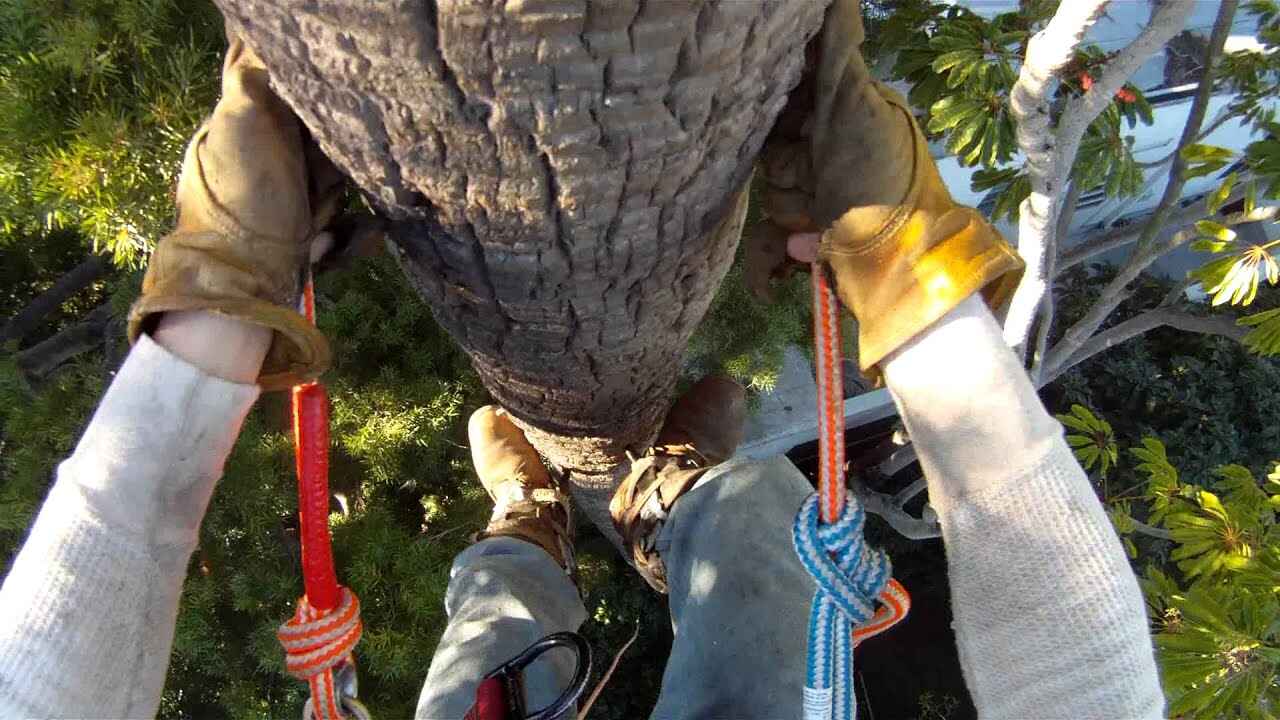
■ Drop Knee: Example of knee drop rock climbing move. A drop knee is a more extreme back step. It works best when you have a foothold near hip level. Step onto it with the tip of your toe; then roll your knee in until the outside of your shoe rests on the hold and your knee actually points down. Just like a back step, a drop knee gets your hip close to the wall. It’s great for a rest, but it’s especially great when you need extra reach on a steep or overhanging wall.
■ Stemming: Example of stemming while rock climbing. Stemming is pushing against two opposing surfaces. This could be in a chimney, in a corner, or on an otherwise flat wall that has a big, protruding feature. You can stem using any combination of hands and feet, but the key is to use counter pressure to stay in balance. Stemming relies on your big leg muscles, so it’s an extremely efficient way to climb, and can give you some great rests.
■ Flagging: Example of flagging while rock climbing. Flagging is counter balancing by using a limb to shift your weight. The goal is to keep from swinging away from the rock. Flagging is advantageous any time you’re using holds that are all on the same side of your body. Because that also stacks all your weight to one side, you simply swing that leg out to the other side of your body to keep yourself in balance.
■ Lay-backing: Lay-backing is when you pull and lean off one side of a flake or a crack and push your feet against the other side. When you have good footholds, laybacks are very efficient because your arms are straight and your feet do the hard work. When lack of good footholds requires you to smear, keep your heels low to maximize the amount of rubber against the rock. You can use a lay-back any time you’re in a crack and jamming isn’t an option, or you’ve got an opposing wall to push off against, like in a dihedral crack.
■ Mantle: Example of a mantle move while rock climbing. A mantle is when you push down on a hold and bring feet up to meet hands. A classic example of mantling is at the top of a climb when you need to pull yourself onto the ledge. To mantle, push down on a hold to get your weight above it, then move your foot up to take the place of your hand. Mantles are necessary when you top out, but are also useful mid-climb when you have a big handhold and you need to get your feet high.
■ Underclings: Example of the undercling move in rock climbing. Like the name implies, an undercling is when you use the underside of a hold. Using underclings may feel counter-intuitive at first, because instead of pulling down on the hold, you’re pulling up. One key to a good undercling is to find good, high footholds so you can maintain body tension by pushing with your feet as you pull on the hold. Keeping your feet high puts the hold around waist level and lets you keep your arms straighter. When done right, a good undercling gets you in a solid position to reach up for some extra elevation.
■ Side Pull: Example of the side pull move when rock climbingA side pull is any hold that’s oriented for a sideways pull. The key to a well-executed side pull is to balance out that sideways pull by shifting your body weight or by applying a counter force. Like underclings, side pulls can feel awkward because you have to adapt the direction of your pull to the orientation of the hold. But once that feeling clicks, suddenly you can use holds all around you, not just those straight above.
■ Hiking: Is the essential element of all climbing, for in the end mountains are climbed by placing one foot in front of another over and over again. The most-arduous hours in mountaineering are those spent hiking or climbing slowly, steadily, hour after hour, on the trails of a mountain’s approach or lower slopes.
■ Rock Climbing: Like hiking, is a widely practiced sport in its own right. The essentials of rock climbing are often learned on local cliffs, where the teamwork of mountaineering, the use of the rope, and the coordinated prerequisites of control and rhythm are mastered. The rope, the artificial anchor, and carabiner (or snap link, a metal loop or ring that can be snapped into an anchor and through which the rope may be passed) are used primarily as safety factors. An exception occurs in tension climbing, in which the leader is supported by a judiciously placed series of anchors and carabiners through which the rope is passed. He or she is then supported on the rope by fellow climbers while slowly moving upward to place another anchor and repeat the process.
■ Base Camp: Base camps are most frequently used by mountain climbers who are trying to reach the summit of very high mountains. These shelters are often stocked with necessary supplies and provide climbers with a safe location for acclimatizing to extreme altitudes. When climbs to the summit take multiple days, several base camps may be located along the trails. Some of the most well-known base camps are located on Mount Everest.
■ Hut: Huts may be well-developed or rustic shelters, located in rural areas at differing elevations along a mountain. These shelters are designed around a shared dining area with private sleeping sleeping quarters. These sleeping rooms are stocked with a bed, pillows, and blankets. Climbers bring a sleeping bag. Like base camp, huts allow a trail to be divided into several days worth of hikes and make it possible for climbers to travel with a reduced pack. During warmer seasons, many huts have full-time staff or volunteers that manage the daily activities necessary to keep the shelter running. In some locations, climbers have the option to purchase snacks, meals, and drinks.
■ Tents: Tents consist of a pole framework, covered in a tarp or some other material and held by ropes and anchors. These shelters are set up at the moment it will be used and are easily portable. Simpler designs require just a thin tarp, while more durable designs incorporate heavier materials that can hold up against dangerous weather conditions. In extreme weather, tents may be set up behind mounds of snow or rock, which act as windbreaks and help protect the shelter. Tents are the most frequently used type of shelter.
■ Snow-cave: Snow caves are preferred over tents by some climbers, where weather conditions permit. These shelters are known to be warmer than tents and have only 2 requirements: snow and a snow shovel. Climbers can build a snow cave in a short amount of time, digging out an area under at least 4 feet of snow. The inner temperature is usually around 32° fahrenheit and for added warmth, climbers use waterproof, lightweight bivvy bags and foam sleeping pads. Another type of snow cave is an igloo, although this requires a very specific construction technique and should only be attempted by those with experience.
■ Bivouac: A bivouac, also known as a bivvy, is a very rudimentary type of shelter. It does not offer a completely enclosed shelter and in some cases, may involve simply sleeping in the open. When in the open, climbers use a sleeping bag and cover it with a bivouac sack (or bivvy bag). A bivouac sack is a lightweight, waterproof liner that provides an additional layer of protection against inclement weather and cold temperatures. Climbers may also set up a bivouac between a crack in nearby rocks or a ditch formed in the snow, both of these offer more shelter. This shelter is often chosen because it allows climbers to carry a reduced-weight pack. A bivouac does have the added risk of climbers being more exposed to dangerous weather.
■ Base Camp:
Base camps are most frequently used by mountain climbers who are trying to reach the
summit of very high mountains. These shelters are often stocked with necessary supplies
and provide climbers with a safe location for acclimatizing to extreme altitudes. When
climbs to the summit take multiple days, several base camps may be located along the trails.
Some of the most well-known base camps are located on Mount Everest.
■ Hut:
Huts may be well-developed or rustic shelters, located in rural areas at differing elevations
along a mountain. These shelters are designed around a shared dining area with private
sleeping sleeping quarters. These sleeping rooms are stocked with a bed, pillows, and
blankets. Climbers bring a sleeping bag. Like base camp, huts allow a trail to be divided
into several days worth of hikes and make it possible for climbers to travel with a
reduced pack. During warmer seasons, many huts have full-time staff or volunteers that
manage the daily activities necessary to keep the shelter running. In some locations,
climbers have the option to purchase snacks, meals, and drinks.
■ Tents:
Tents consist of a pole framework, covered in a tarp or some other material and held by
ropes and anchors. These shelters are set up at the moment it will be used and are easily
portable. Simpler designs require just a thin tarp, while more durable designs incorporate
heavier materials that can hold up against dangerous weather conditions. In extreme
weather, tents may be set up behind mounds of snow or rock, which act as windbreaks and
help protect the shelter. Tents are the most frequently used type of shelter.
■ Snow-cave:
Snow caves are preferred over tents by some climbers, where weather conditions permit.
These shelters are known to be warmer than tents and have only 2 requirements: snow and
a snow shovel. Climbers can build a snow cave in a short amount of time, digging out an
area under at least 4 feet of snow. The inner temperature is usually around 32° fahrenheit
and for added warmth, climbers use waterproof, lightweight bivvy bags and foam sleeping
pads. Another type of snow cave is an igloo, although this requires a very specific
construction technique and should only be attempted by those with experience.
■ Bivouac:
A bivouac, also known as a bivvy, is a very rudimentary type of shelter. It does not
offer a completely enclosed shelter and in some cases, may involve simply sleeping in
the open. When in the open, climbers use a sleeping bag and cover it with a bivouac
sack (or bivvy bag). A bivouac sack is a lightweight, waterproof liner that provides an
additional layer of protection against inclement weather and cold temperatures. Climbers
may also set up a bivouac between a crack in nearby rocks or a ditch formed in the snow,
both of these offer more shelter. This shelter is often chosen because it allows climbers
to carry a reduced-weight pack. A bivouac does have the added risk of climbers being more
exposed to dangerous weather.

■ Falling: Maybe the most common danger, and one that almost everyone is afraid of.
■ Avalanches: Avalanches can hit you at any time, and even the best mountaineers in the world sometimes succumb to them.
■ Weather: Weather patterns in the mountains change quickly, and you can find yourself stuck if the conditions suddenly turn.
■ Exposure: Spending tens of hours in the beating sun or freezing cold can start to mess with your body and brain (I recently dropped a rappel device due to heat stroke).
■ Hypothermia: Spending too long in the cold will cause your body to start to shut down.
■ Altitude sickness: Not getting enough oxygen to your brain can muddle your thinking and cause fever-like symptoms.
■ Pulmonary Edema: A specific type of altitude sickness where blood builds up in your lungs.
■ Cerebral Edema: An even worse form of altitude sickness, where blood builds up in your brain.
■ Exhaustion: Tiring yourself out can lead to poor decision making, falls, and injuries.
■ Rockfall: Due to erosion and temperature change, chunks of rock will come loose. Once hit from these could easily kill you.
■ Icefall: Similar to above, except this time with ice.
■ Snow blindness: When the sun reflects off the snow, it sometimes becomes so bright that it causes temporary loss of eyesight.
■ Crevasses: Cracks in glaciers that can be up to hundreds of feet deep. A fall into one of these can be life-ending.
■ Broken equipment: Although this rarely happens, it can leave you stranded when it does.
■ Navigational errors: If you end up in the wrong place while mountain climbing, your situation could turn out a lot more dangers than you planned.
■ Summit Fever: Becoming obsessedwith your goal can lead to poor decision making, accidents, and exhaustion.
■ Injury: Whether it’s a twisted ankle, a broken bone, or a concussion, unforeseen injuries can strand you while mountain climbing.
■ Animals: Wild animals like bears, cougars, and wolves need to be taken into account when climbing mountains.
■ Hunger and Dehydration: Not giving your body enough fuel to operate on can wear you down.
■ Carelessness: Becoming overconfident or over relaxed is a death sentence while mountain climbing (especially if combined with any of the other factors.
■ Falling:
Maybe the most common danger, and one that almost everyone is afraid of.
■ Avalanches:
Avalanches can hit you at any time, and even the best mountaineers in the
world sometimes succumb to them.
■ Weather:
Weather patterns in the mountains change quickly, and you can find yourself stuck if
the conditions suddenly turn.
■ Exposure:
Spending tens of hours in the beating sun or freezing cold can start to mess with your
body and brain (I recently dropped a rappel device due to heat stroke).
■ Hypothermia:
Spending too long in the cold will cause your body to start to shut down.
■ Altitude sickness:
Not getting enough oxygen to your brain can muddle your thinking and cause fever-like
symptoms.
■ Pulmonary Edema:
A specific type of altitude sickness where blood builds up in your lungs.
■ Cerebral Edema:
An even worse form of altitude sickness, where blood builds up in your brain.
■ Exhaustion:
Tiring yourself out can lead to poor decision making, falls, and injuries.
■ Rockfall:
Due to erosion and temperature change, chunks of rock will come loose. Once hit from
these could easily kill you.
■ Icefall:
Similar to above, except this time with ice.
■ Snow blindness:
When the sun reflects off the snow, it sometimes becomes so bright that it causes
temporary loss of eyesight.
■ Crevasses:
Cracks in glaciers that can be up to hundreds of feet deep. A fall into one of these
can be life-ending.
■ Broken equipment:
Although this rarely happens, it can leave you stranded when it does.
■ Navigational errors:
If you end up in the wrong place while mountain climbing, your situation could turn out
a lot more dangers than you planned.
■ Summit Fever:
Becoming obsessedwith your goal can lead to poor decision making, accidents, and exhaustion.
■ Injury:
Whether it’s a twisted ankle, a broken bone, or a concussion, unforeseen injuries can
strand you while mountain climbing.
■ Animals:
Wild animals like bears, cougars, and wolves need to be taken into account when climbing
mountains.
■ Hunger and Dehydration:
Not giving your body enough fuel to operate on can wear you down.
■ Carelessness:
Becoming overconfident or over relaxed is a death sentence while mountain climbing
(especially if combined with any of the other factors.
Saturday, November 14, 2020, 8:00 AM to Wednesday, November 18, 2020, 10:00 AM IST
Saturday, June 8, 2019, 9:00 AM to Saturday, June 15, 2019, 7:00 PM IST
Alpine Ascent has many connections and below is an overview of some of our organized camps and branches round the globe. Each of the branches has been represented with a pointer on the map.
The notable developments includes an increase in the “Alpine” style of climbing the
highest peaks, where mountaineers carried a minimal amount of equipment and supplies and
did not rely on porters and other outside support, and a rise in the number of people
climbing at high elevations without the use of supplemental oxygen.
Improvemnets of climbing gears such as Grade VII’s “Haul Pack” series (22, 36, and 55L)
which is lightweight and durable multi-pitch/alpine climbing packs.
The packs are designed to be hauled without stowing the shoulder straps,
making for speedy approach/climb/haul transitions, and have just one haul loop.
Each pack features a rope strap, ice-tool attachments, and an exterior elastic bungee
cord to further increase carrying capacity.
Mountaineering is a pursuit that should never be undertaken without a good understanding of the many different aspects involved, ranging from map reading and navigation skills to rope work and understanding mountain weather. You should definitely consider booking up with a reputable organisation offering expert advice.
■ Preparation and planning: Take time to plan and prepare for your ascent.
This will be time well spent and the chances of your having a successful and enjoyable
ascent will be far higher if you have prepared well. Take time to plan your route and
prepare your kit regardless of whether you’re going for a short climb or a two month
expedition, some careful planning can make all the difference. As well as careful
planning, always check your kit before you leave … it is no good being out on the
mountain only to find you left your ice-ax at home.
■ Footwear for mountaineering:
Make sure you invest in a good pair of rugged mountaineering
boots. For summer mountaineering you can get away with a stiff pair of walking boots, but
for winter mountaineering a crampon rated boot will be needed. Visit a reputable outdoor
retailer who will offer good advice on the best mountaineering boot to suit your needs.
■ Food for mountaineering:
Make sure to carry plenty of food (and water) on any mountaineering trip.
Food needs to be high in energy and lightweight. Many high-energy bars and pre-packaged meals are
now available. Food can make or break longer expeditions so make sure the food you carry
is something tasty and enjoyable too! It is essential on any mountaineering trip to carry
emergency rations in case you are on the mountain for longer than anticipated.
■ Weather watching:
Before embarking on any mountaineering trip make sure you get a local
weather forecast. You can always postpone a summit attempt for another day, with more
favourable weather conditions. However, once you are on a mountaineering route you will
often be committed with little options for retreat so checking the weather in advance is
a must!
■ Emergency shelter:
Too many completely avoidable accidents and injuries occur in
mountaineering because people simply underestimate the awesome forces of mountain
weather. Always carry an emergency shelter, they are small and lightweight but can
be life savers, protecting you from the elements should the weather suddenly turn.
There are many shelters available from two-person to large group shelters. Some of the
best available are Terra Novas Bothy Bags.
■ Actions for an emergency:
Nobody wants to think that an accident will ever happen to
them but it would be foolhardy to think that this will always be the case. Take some time to
prepare for, and practice actions on different types of emergencies. High levels of
training mean you will react without having to think, which is beneficial since
decision-making abilities are severely impaired in stressful conditions.